Green/Purple Ramp
Ramp: 6+ cards that add souls or discount gear, so expensive Pals arrive early.
Player games and simulated bot games together. A simulated game counts a quarter of a player game. · 11 player games · 32,826 simulated · last 7 days
Green/Purple Ramp
5 published decks · no new decks
42%
win rate
- Share
- 5% of published decks
- Rating
- 39%
- Length
- 7.09 turns
- Mulligan
- —
- On the play
- 39%
- On the draw
- 45%
- Games
- 3,866
How it wins
Damage 93% · Decking 7%
Key cards
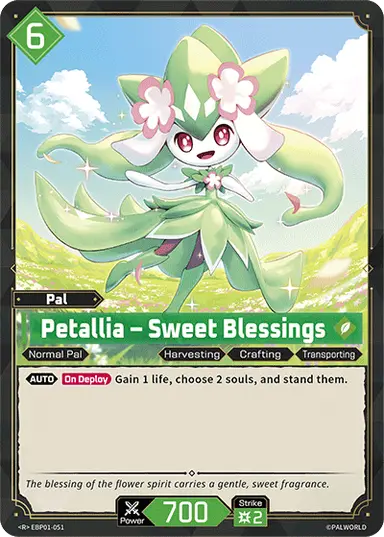
What Green/Purple Ramp decks run
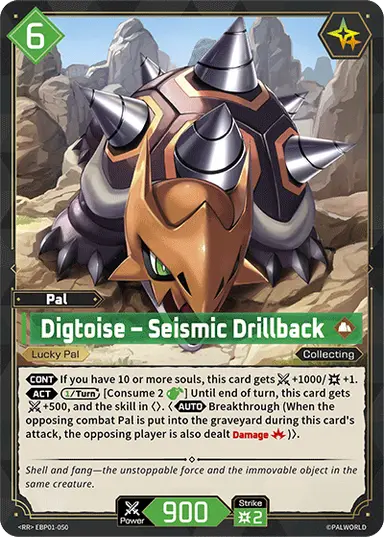
100% of decks · 4× avg
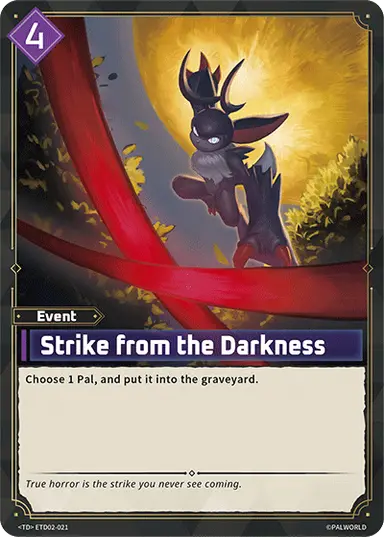
100% of decks · 4× avg
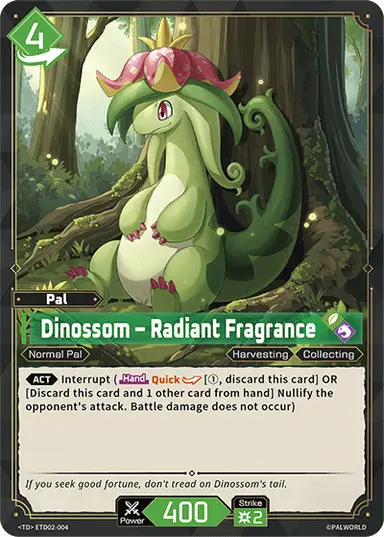
100% of decks · 3.8× avg
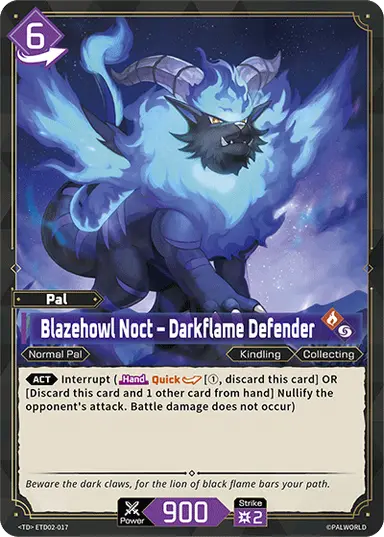
Blazehowl Noct – Darkflame Defender
100% of decks · 3.8× avg
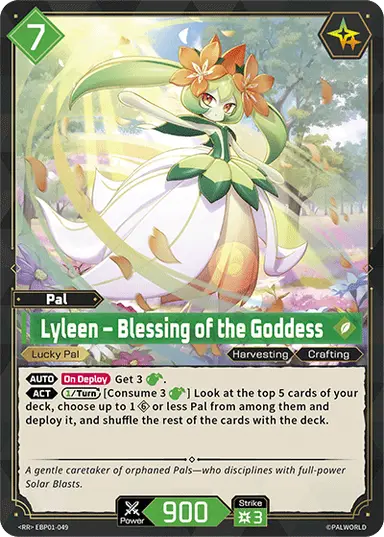
Lyleen – Blessing of the Goddess
100% of decks · 3.6× avg
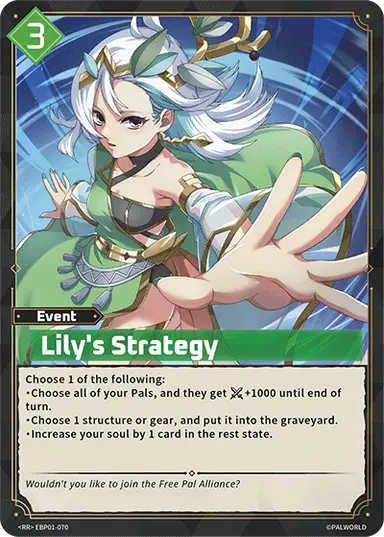
100% of decks · 3× avg
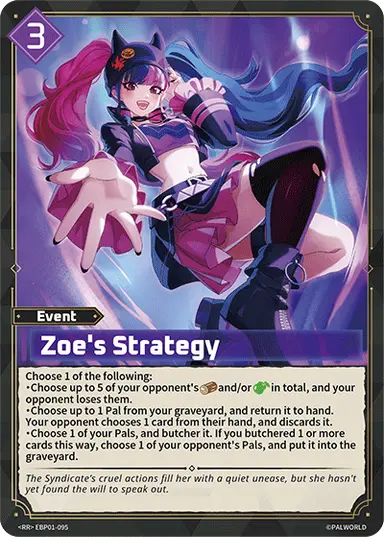
100% of decks · 3× avg
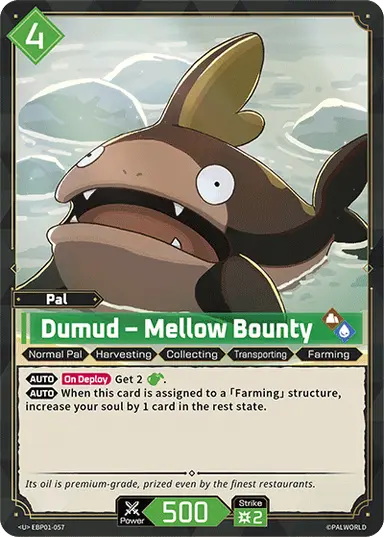
80% of decks · 3.75× avg
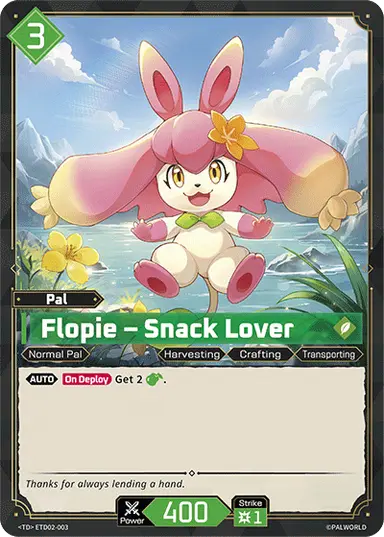
80% of decks · 3.75× avg
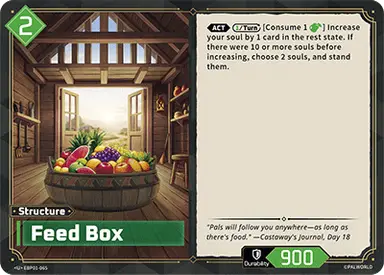
80% of decks · 3× avg


Head to head
Matchups
Green/Purple Ramp against the field, best matchup first. Bars run right where it is favoured and left where it is not, from a centre line at 50%. 3,866 games played.
- Purple/Red Control71%80 g
- Mono-Red Aggro70%20 g
- Mono-Red Midrange63%80 g
- Green/Purple Midrange61%284 g
- Mono-Purple Control59%100 g
- Purple/Red Midrange57%60 g
- Green/Purple Control53%432 g
- Blue/Green Ramp49%380 g
- Green/Red Ramp49%72 g
- Blue/Red Midrange48%172 g
- Blue/Red Aggro44%68 g
- Mono-Green Aggro43%88 g
- Green/Purple Combo39%36 g
- Green/Red Combo35%20 g
- Mono-Green Ramp33%36 g
- Blue/Red Control33%600 g
- Blue/Green Midrange32%68 g
- Blue/Purple Control32%552 g
- Green/Red Midrange31%266 g
- Blue/Green Combo25%20 g
- Blue/Green Control19%256 g
Decks
Green/Purple Ramp decks that have played
- 2
- Rating
- 34%
- Win rate
- 43%
- Games
- 380
- Length
- 7.25 turns
- Play / draw
- 44% / 43%
- 3
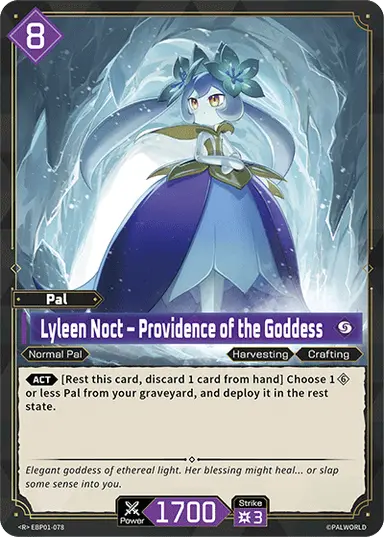
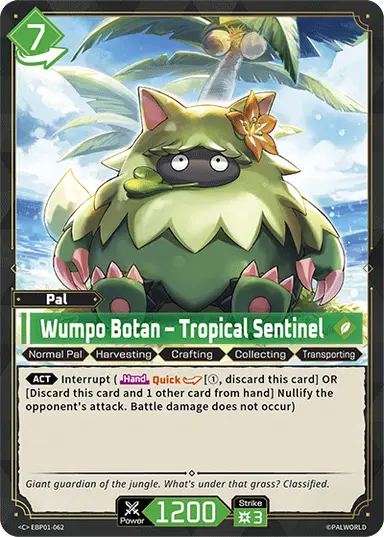
- Rating
- 33%
- Win rate
- 42%
- Games
- 380
- Length
- 6.94 turns
- Play / draw
- 40% / 45%
- 4
- Rating
- 34%
- Win rate
- 43%
- Games
- 380
- Length
- 6.65 turns
- Play / draw
- 44% / 42%


5 published decks in this archetype. All archetypes
How these numbers are made
Two kinds of games. Player games are finished online, friendly, private and tournament matches between people. Simulated games are bot-versus-bot games on published decks, played on our own machines with the same rules engine as the game. The Combined view counts a simulated game as 0.25 of a player game; Players and Simulated show each on its own. Practice games against a bot are not counted as player games.
Share and trend. Which pairings get simulated is decided by our scheduler, not by players, so simulated games say nothing about popularity. Share of play therefore uses player games only. Where there are none, we show the share of published decks instead and say so; its trend is how many decks were created in the last 14 days against the 14 before.
Rating. The win rate a record can defend: the lower end of a 95% confidence interval, so a long record counts for more than a lucky streak. Draws count as half a win.
Small samples are hidden, not rounded. An archetype shows a rate from 30 games, a pairing from 12, a deck rating from 15, a card win rate from 30. On-play and on-draw need 15 games each way. A dash means not enough games. Simulated on-play, on-draw and mulligan figures also need the simulator to pass its calibration check, and say why when they are hidden.
Archetypes are read from the list. Nobody writes their plan on the tin, so the label comes from the 50 cards: the colour pair, then a role. Ramp: 6+ cards that add souls or discount gear. Control: 7+ that remove, sweep or stun Pals. Combo: 14+ that search the deck or recur from the graveyard. Aggro: an average cost of 3.9 or less. Anything else is Midrange. It is a heuristic, and it can disagree with what a deck's author calls it.
Length is turns per player, not counting the opponent's. Simulated bots never concede or run out the clock, so a simulated “how it wins” can only split damage from decking. Simulated win rates are against the decks we schedule, which favours well-known decks.